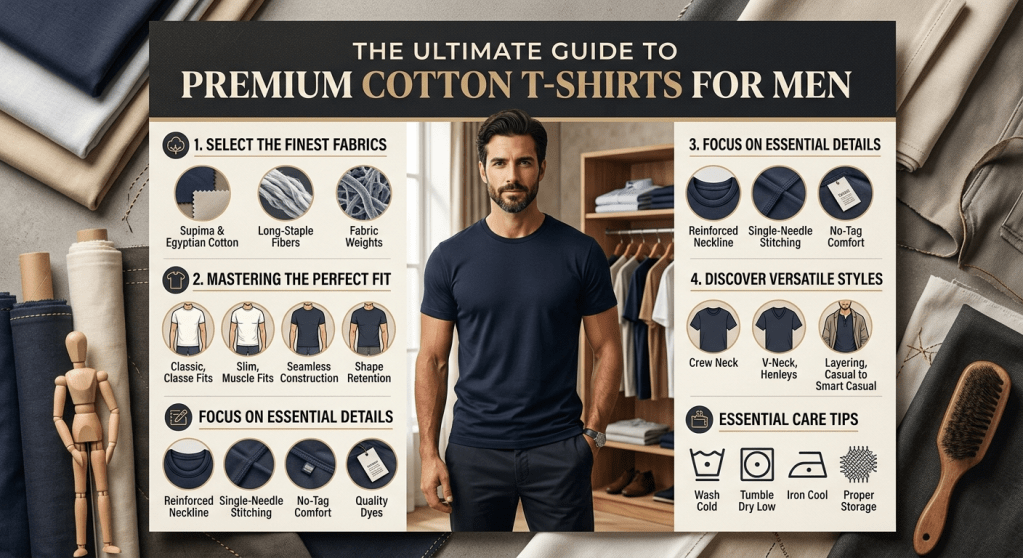
A good t-shirt sounds simple. Buy one, wear it, done.
But anyone who has worn a shirt that shrinks after one wash, loses its shape by week three, or goes see-through after a few months knows the truth. Not all t-shirts are built the same.
That’s where premium cotton t-shirts come in. They’re the quiet foundation of a wardrobe that actually works — comfortable, durable, and good-looking without trying too hard.
This guide breaks down everything you need to know before your next purchase, whether you’re shopping for yourself or just trying to understand why some shirts cost more and feel better. Think of it as a quick crash course in premium fashion basics.
Why Premium Cotton Matters More Than You Think
Cotton is cotton, right? Not quite.
The quality of cotton used in a t-shirt determines how it feels on day one and how it holds up on day one hundred. Cheap cotton blends often pill, fade, and stretch out of shape quickly. Premium cotton, on the other hand, is woven from longer, finer fibers that resist all of that.
When a brand focuses on quality clothing, the difference shows in the small details — the weight of the fabric, the stitching at the seams, and how the shirt drapes on your body instead of just hanging there.
The Fiber Length Factor
Longer cotton fibers, like those found in Pima or Egyptian cotton, create smoother, stronger yarns. Shorter fibers, common in low-cost fast fashion, break apart faster and create that rough, thin texture you feel after a few washes.
This is one reason premium apparel brands are upfront about their fabric sourcing. It’s not marketing fluff — it’s the actual reason the shirt feels different in your hands.
What Makes a T-Shirt “Premium” Anyway
The word “premium” gets thrown around a lot. So what does it actually mean for a t-shirt?
It usually comes down to four things: fabric quality, construction, fit, and finish. A shirt can check every one of these boxes without being flashy or expensive-looking.
Fabric Weight and Feel
Premium cotton t-shirts typically sit between 180 and 220 GSM (grams per square meter). This range gives you a shirt that feels substantial without being heavy or stiff in hot weather.
Lighter shirts under 150 GSM tend to feel thin and see-through. Heavier ones over 240 GSM can feel more like a sweatshirt than a tee.
Stitching and Seams
Flip a cheap t-shirt inside out and you’ll usually see loose threads, uneven seams, or single-stitched hems. Premium clothing uses reinforced double stitching, especially at the shoulders, sleeves, and bottom hem, so the shirt doesn’t fall apart at the seams after a few washes.
Fit That Actually Fits
A premium tee is cut to flatter, not just cover. That means tapered sides, properly proportioned sleeves, and a collar that doesn’t stretch out after the second wear.
This is part of what separates stylish clothing from basic clothing. The cut matters just as much as the fabric.
The Real Benefits of Investing in Quality T-Shirts
It’s easy to assume cheaper is always smarter. But with t-shirts, that math often falls apart fast — literally.
They Last Longer
A well-made cotton tee can easily outlast three or four cheap ones. Better fibers and stronger construction mean less pilling, less fading, and less stretching over time.
They Look Better, Longer
Premium fabric holds its color and shape through repeated washes. That faded, baggy look that cheap shirts get after a month? Premium cotton resists it for much longer.
They Feel Genuinely Comfortable
This is the part people notice first. Comfortable fashion isn’t about loose, baggy clothing — it’s about fabric that breathes, moves with you, and doesn’t irritate your skin.
Premium cotton is naturally breathable, which makes it ideal for everyday wear in warm climates or layered looks in cooler ones.
They’re a Better Value Over Time
A $40 shirt that lasts three years works out cheaper than four $15 shirts that fall apart in a year combined. This is the entire logic behind getting a real yard of deal — paying a fair price for something that actually delivers value, rather than chasing the lowest sticker price.
How to Spot Premium Quality Before You Buy
You don’t need to be a textile expert to shop smart. A few quick checks go a long way.
Check the Fabric Composition
Look for 100% cotton or high-cotton blends (like cotton-modal or cotton-elastane) with clear fiber sourcing, such as Pima, Supima, or combed cotton. These terms usually signal better quality control.
Feel the Weight
Hold the shirt up. Premium cotton has a slight heft to it — not heavy, but substantial. If it feels paper-thin, it probably won’t hold up well.
Inspect the Seams
Turn it inside out. Look for clean, even double stitching, especially around the neckline and hems. Loose threads or single stitching are red flags.
Look at the Collar
Stretch the collar gently. A well-made tee will spring back into shape. Cheap shirts often stay stretched out, which ruins the whole look.
Read Reviews and Brand Reputation
Brands that consistently deliver quality clothing tend to have detailed product descriptions and transparent sourcing information. If a brand hides details about fabric or construction, that’s worth noting.
Styling Premium Cotton T-Shirts for Every Occasion
A great t-shirt is only as good as how you wear it. The good news is that premium tees are versatile enough to work across almost every casual and semi-casual setting.
Everyday Casual
Pair a well-fitted crew neck or V-neck with jeans or chinos. Stick to neutral colors like white, black, navy, or grey for maximum versatility.
Smart Casual
Layer a premium tee under a blazer or light jacket. The smoother texture and clean fit of quality cotton make it look intentional rather than thrown together.
Athletic and Lounge Wear
Lightweight premium cotton blends with a touch of stretch work well for relaxed days or light activity, offering comfortable fashion without sacrificing structure.
Layering Pieces
A solid-colored premium tee is one of the most useful layering pieces you can own. It works under flannels, cardigans, and overshirts without adding bulk.
Current Fashion Trends in Men’s T-Shirts
Men’s basics have quietly become a major focus in fashion trends over the past few years. A few shifts stand out right now.
Boxier, Relaxed Fits
Slim fit isn’t the only option anymore. Boxier silhouettes with dropped shoulders are gaining popularity, offering comfort without looking sloppy.
Earth Tones and Muted Palettes
Sage green, rust, taupe, and warm browns are replacing the classic black-and-white rotation in a lot of modern wardrobes.
Heavyweight Cotton
Heavier GSM tees, once mostly seen in streetwear, are now common in everyday premium apparel because they feel more durable and structured.
Minimal Branding
Subtle logos or no visible branding at all is trending, putting more focus on fit and fabric quality rather than flashy graphics.
Caring for Your Premium Cotton T-Shirts
Even the best shirt needs proper care to stay in good shape.
Wash Cold, Not Hot
Hot water breaks down cotton fibers faster and increases shrinkage. Cold or lukewarm water keeps the fabric intact longer.
Turn Shirts Inside Out
This reduces friction on the printed or outer surface and helps preserve color longer.
Skip the Dryer When Possible
Air drying prevents shrinkage and reduces wear on the fibers. If you must use a dryer, choose a low-heat setting.
Avoid Overloading the Washer
Too many clothes packed together causes more friction and pilling. Give your shirts room to move during the wash cycle.
Building a Capsule Wardrobe Around Quality Tees
A handful of well-chosen t-shirts can replace a closet full of mediocre ones.
Start with neutral basics: white, black, grey, and navy. Add one or two earth-tone pieces for variety. Choose a consistent fit across all of them so mixing and matching feels effortless.
This approach to premium clothing isn’t about owning more. It’s about owning better, fewer things that work harder for you.
Frequently Asked Questions
What GSM is best for a premium cotton t-shirt?
Most quality t-shirts fall between 180 and 220 GSM. This range balances comfort, breathability, and durability without feeling too thin or too heavy.
Is 100% cotton always better than cotton blends?
Not necessarily. Pure cotton breathes well and feels soft, but blends with a small percentage of elastane or modal can add stretch and reduce wrinkling, which some people prefer for everyday comfortable fashion.
How can I tell if a t-shirt will shrink?
Check the care label and fabric composition. Pre-shrunk or combed cotton tends to hold its size better. Washing in cold water and avoiding high heat drying also reduces shrinkage significantly.
Why do premium t-shirts cost more?
The higher price usually reflects better raw materials, finer stitching, and more careful construction. It also often reflects fairer labor practices, which matter to many shoppers looking for a genuine yard of deal rather than a cheap shortcut.
How many premium t-shirts should I own?
Most people do well with six to ten quality tees in neutral and versatile colors. This covers a full week of wear with rotation room for laundry days.
Do premium cotton t-shirts work for layering?
Yes. Their smoother texture and consistent fit make them ideal under jackets, flannels, and cardigans without adding unnecessary bulk.
Conclusion
A t-shirt might seem like the most basic item in your closet, but it carries more weight than people give it credit for. The fabric, the fit, the stitching — all of it adds up to how you feel and look every single day.
Choosing premium cotton t-shirts isn’t about chasing trends or overspending. It’s about understanding what actually makes clothing last, feel good, and look sharp over time.
Whether you’re refreshing your basics or building a wardrobe from scratch, prioritizing quality clothing over quantity pays off in comfort, style, and long-term value. A few well-made tees will always outperform a drawer full of shirts that fall apart in a season.
In the end, premium apparel isn’t a luxury. It’s simply smarter dressing.


